

AI MVP Development: How Startups Validate AI Products Faster
Learn how startups build and validate AI MVPs faster using modern AI infrastructure and LLM technologies.
September 1, 2026
•
6
min read


Welcome back to our AI News Digest series, where we track the breakthroughs, market moves, and strategic shifts shaping the industry in real time. If you missed the earlier installments, you can catch up with Digest #1 and Digest #2. In this edition, we unpack the biggest AI trends Q4 2025: from new model releases and agentic AI momentum to policy pressure and the developments that could define the road into 2026.

Source: https://avahi.ai/glossary/ai-regulation/
Early this quarter, OpenAI positioned GPT-5.4 as a frontier model for professional work, complete with upgrades in coding, computer use, tool search, and a 1M-token context window. Two weeks later, OpenAI extended the rollout with GPT-5.4 mini and nano, smaller variants optimized for high-volume workloads. This shifts the argument from “one flagship model” to a whole stack of deployments. Large-model depth for complex workflows, smaller-model efficiency for routing, automation, and cost-sensitive apps. For developers, that means more granular orchestration; for businesses, it means more room to tune latency, quality, and unit economics instead of overpaying for every prompt.
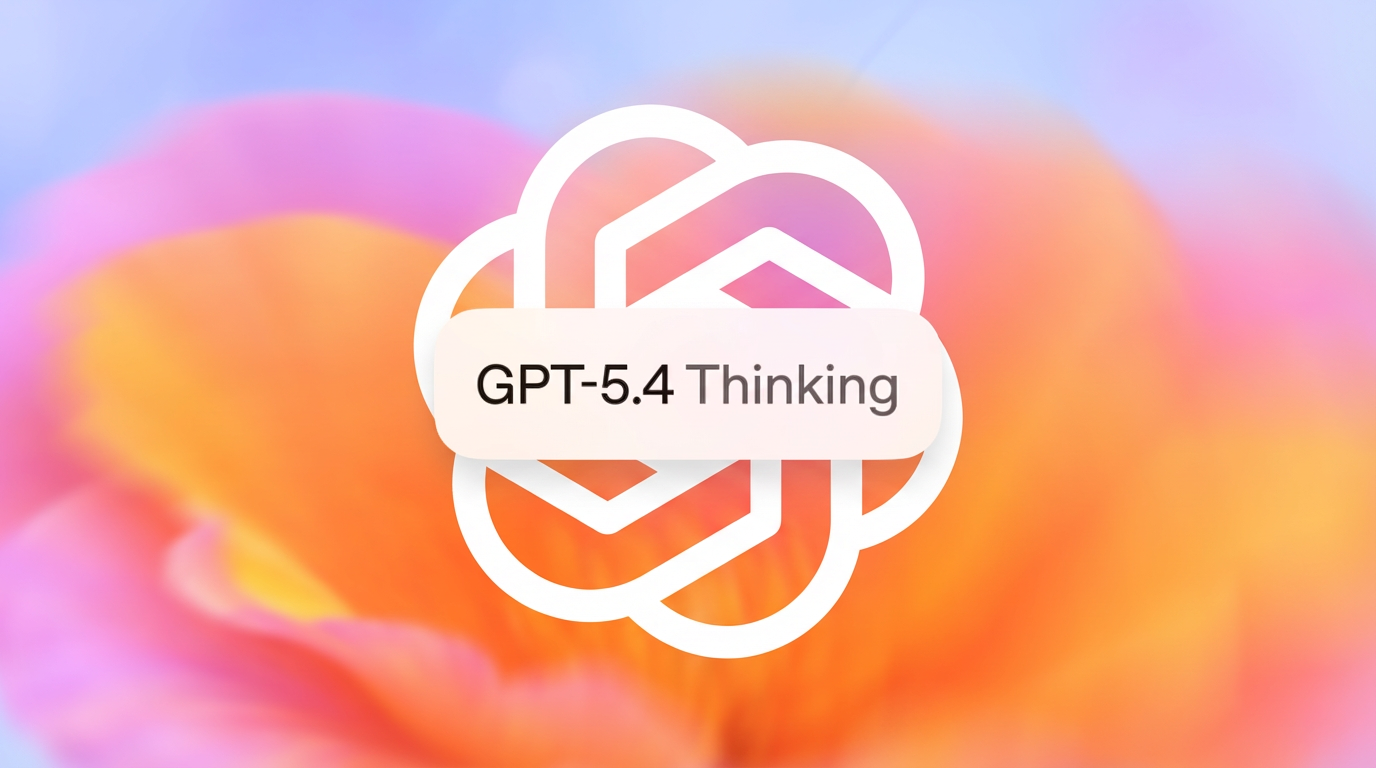
Source: https://the-decoder.com/openai-launches-gpt-5-4-thinking-and-pro-combining-coding-reasoning-and-computer-use-in-one-model/
Meanwhile, Google headed its Gemini line in a more segmented direction. Gemini 3.1 Pro came out as the more advanced intelligence tier for complex tasks, while Gemini 3.1 Flash-Lite and Flash Live were designed to run better with low-latency workloads and real-time audio interactions. The message here is clear: Google is tightening its model ladder around reasoning on one side and live, production-grade responsiveness on the other. That’s important for folks building voice agents, copilots, and multimodal apps, given that throughput and conversational strength now carry as much weight as raw benchmark performance.
Anthropic, for its part, maintained pace with Claude Opus 4.6 and Claude Sonnet 4.6. Both releases focused on stronger coding, agent planning, long-context reasoning, and 1M-token context windows in beta, which also positions Anthropic squarely in the market for sustained, tool-using workflows rather than one-shot chat. Then, in April, the firm tacked on a late-breaking headline with a general-purpose model called Claude Mythos Preview, which Anthropic says is particularly strong on computer security tasks. So the Claude story this time was not iteration, but expansion into longer-horizon agents and more niche, high-stakes domains.
And then Meta reversed the script. Instead of shipping a new Llama-branded release, it introduced Muse Spark, a new model series from Meta Superintelligence Labs that also acts as the foundation for the Meta AI app and web experience, with rollout planned across WhatsApp, Instagram, Facebook, Messenger, and AI glasses.
This quarter, agentic AI started hardening into real infrastructure. Microsoft pushed that shift forward with the release candidate of Microsoft Agent Framework, a unified open-source stack that effectively consolidates the fragmented post-AutoGen, post-Semantic Kernel toolchain.
At the same time, Google kept expanding its agent stack through ADK 1.0 for Java and Go, adding production-grade features. Anthropic added another major signal in March and April with Claude Managed Agents, now in public beta, offering hosted agent harnesses, secure sandboxing, built-in tools, and stateful sessions for long-horizon autonomous work.

Source: https://the-decoder.com/anthropic-launches-managed-infrastructure-for-autonomous-ai-agents/
Just as important, the plumbing is maturing alongside the products. MCP is now functioning as a de facto interoperability layer for tools, data sources, and workflows, and its governance was pushed further into the open with its transfer to the Linux Foundation’s Agentic AI Foundation. Due to this protocol-level momentum, enterprise deployments are no longer theoretical.
Google’s GEAR program is explicitly aimed at scaling Gemini-based agents in production, while Anthropic’s own 2026 report points to measurable gains in hiring workflows. The broader takeaway of such AI agents news is that the market is moving beyond chat interfaces and toward execution layers.
The headline in the latest EU AI act updates is that the law is no longer a future-policy story. What changed in practice is the level of operational detail now available. The Commission has issued guidelines on prohibited AI practices and on the definition of an AI system. It also launched the AI Act Service Desk and Single Information Platform to give companies concrete compliance tools.
For the corporate sector, the most immediate issue is not “Is all AI regulated?” but “Which uses are now clearly off-limits?” The prohibited category includes practices such as:
So if a company is experimenting with employee monitoring, affect detection in HR tools, or sensitive biometric profiling, the compliance question is no longer theoretical. Some use cases are now simply outside the legal perimeter.
At the same time, the Act’s general-purpose AI regime is already live, and that is a major shift for companies building on foundation models. The GPAI Code of Practice, published on July 10, 2025, is a voluntary but officially endorsed route for demonstrating compliance with obligations on transparency, copyright, and, for the most advanced models, safety and security.

Source: https://www.linkedin.com/pulse/ai-regulation-governments-husam-yaghi-ph-d-9cale
Now there’s a major 2026 twist: the next significant deadline is not as clean-cut as many expected. The obligations for Annex III high-risk systems, Article 50 transparency duties, and broader enforcement (as described in the current service-desk timeline) are to be in force from August 2, 2026, while some AI embedded in regulated products will stay on track until 2027. However, in March 2026, the Council adopted a position to push back the deadline for high-risk AI rules by up to 16 months because important standards, tools, and national authorities were not yet fully in place.
A possible delay should not be thought of by companies as a pause, though. The direction of travel is unchanged, but there is a recalibration of implementation mechanics still being achieved.
If you want the clearest signal from AI news 2026, it is this: the quarter’s most credible stories came from companies reporting measurable gains in production. For one, Citigroup. It offered one of the clearest operational examples. According to Reuters, the bank is using AI to accelerate client onboarding, software modernization, coding, and testing, with document processing for account openings dropping from more than an hour to roughly 15 minutes. It is a workflow compression story inside a heavily regulated environment. Just as importantly, Citi is tying AI deployment to a broader internal rebuild.

Source: https://www.pymnts.com/artificial-intelligence-2/2026/citigroup-aims-to-help-bankroll-3-trillion-ai-infrastructure-buildout/
Tata Consultancy Services demonstrated what scaled enterprise demand can look like from the services end. In results reported on April 9, it said its annualized AI revenue reached $2.3 billion in Q4, up from $1.8 billion in the previous quarter, and that FY26 represents a turning point where enterprise AI moved more overtly from experimentation to scaled deployment.
That’s important because TCS is near real implementation budgets in industries: when a company of that size reports accelerating AI revenue and a stronger order book, it signals that spending for AI is now going farther into transformation programs. This quarter’s deployment story also appears in services balance sheets, in other words.
FM Logistic brought a more industrial version of the same trend. In a March 2026 Google Cloud case study, the company said its production pilot in Poland used AlphaEvolve and Gemini to improve warehouse routing efficiency by 10.4% over an already optimized baseline, cutting annual warehouse travel by more than 15,000 kilometers at full scale.
That result is especially notable because it is not about chat interfaces or office productivity. It is AI rewriting decision logic in a live operational system. For supply chain and manufacturing leaders, that is one of the quarter’s stronger proofs that AI is moving into optimization problems with direct cost and throughput impact.
Besides the focus on the latest AI models 2026 there’s many other exciting trends coming:
So, we see that across the tooling layer, the story is no longer prompt wrappers or thin SDK refreshes. The quarter’s real shift is toward agent runtimes, structured outputs, multimodal I/O, and orchestration primitives. In other words, the infrastructure needed to move from demo apps to durable AI systems.
The biggest trend to watch is the shift from isolated chat features to full agent infrastructure. OpenAI is continuing to center its platform around the Responses API and newer real-time capabilities. Microsoft has now pushed Agent Framework to a production-ready 1.0 release for .NET and Python. Taken together, those moves suggest that the next phase of competition will be less about standalone model demos and more about who can provide the most stable runtime for AI systems.
At the same time, interoperability is becoming a bigger story of its own. MCP is moving beyond a developer niche and into more formal governance through the Agentic AI Foundation under the Linux Foundation, which is exactly the kind of signal that usually precedes wider enterprise adoption.
That wraps this edition of the digest. If you want to keep tracking the signals shaping AI adoption, subscribe for the next update or explore the rest of the series for a broader view of where the market is heading.
And if your team is moving from AI experimentation to implementation, now is the time to turn trend awareness into delivery. Whether you are building agent workflows, upgrading internal tooling, or planning enterprise AI products, we can help translate fast-moving market changes into systems that actually ship. Contact us today!

Lorem ipsum dolor sit amet, consectetur adipiscing elit. Suspendisse varius enim in eros elementum tristique. Duis cursus, mi quis viverra ornare, eros dolor interdum nulla, ut commodo diam libero vitae erat. Aenean faucibus nibh et justo cursus id rutrum lorem imperdiet. Nunc ut sem vitae risus tristique posuere. uis cursus, mi quis viverra ornare, eros dolor interdum nulla, ut commodo diam libero vitae erat. Aenean faucibus nibh et justo cursus id rutrum lorem imperdiet. Nunc ut sem vitae risus tristique posuere.
Reply