

AI MVP Development: How Startups Validate AI Products Faster
Learn how startups build and validate AI MVPs faster using modern AI infrastructure and LLM technologies.
September 1, 2026
•
6
min read


The Responses API was presented by OpenAI as the main primitive for agents to be built on (stateful mode, tool use, and “store:true” memory hooks). They also released an Agents SDK (Python and JS/TS), complete with loops, handoffs, guardrails, and integrated tracing/observability. GPT-5 rolled out to developers with multimodal I/O and improved reasoning; DevDay materials highlighted agent tooling (AgentKit/Operator) and enterprise integration points.
Source: https://petapixel.com/2024/10/25/former-openai-employee-condemns-the-companys-data-scraping-practices/
This is a shift from “model as endpoint” to agent runtime + ops surface. Responses API simplifies orchestration while preserving tool calling and state, reducing glue code across assistants, evaluators, and tools. The Agents SDK + tracing lowers MTTR for agent failures and enables LLM ops norms, running metadata, spans, tool calls, and handoffs to become first-class for audits and SLA. Memory improvements in ChatGPT foreshadow org-level stateful assistants.
Also, look for businesses to start using OpenAI’s basic features together: stateful agents, built-in tools (like web, file, and computer interfaces), and standard traces that developers can forward to MLflow/APM backends. Procurement will demand traceability hooks and policy enforcement on the agent layer, and not only at the model level.
Anthropic released Claude Sonnet 4.5, with agentic reasoning upgrades and stronger tool/computer use. Long-context (up to ≈1M tokens) entered broadly available beta on API/Bedrock/Vertex for Sonnet 4/4.5. Claude also shipped integrations for Notion, Google Drive, Canva, Slack and others, positioning Claude as an embedded worker across team tools.
Source: https://aibusiness.com/nlp/ai-news-roundup-anthropic-launches-claude-pro-service
1M-token sessions reduce chunking and brittle retrieval flows for multi-doc legal reviews, codebase-scale reasoning, and complex RFPs. Native app connectors turn Claude from a chat surface into a context-privileged operator within existing SaaS. For enterprises piloting “copilots,” this collapses switching costs and unlocks cross-tool workflows without custom plumbing.
Copilots are evolving toward data-adjacent agents that reason over entire workspaces with enterprise controls. Expect budgets to move from “seat-based chat” to workflow outcomes (e.g., SLA’d case summaries, PR reviews), with context quotas and long-context pricing influencing TCO models.
Google advanced the Gemini 2.5 family (Flash GA; Pro staged for availability) and published progress on Gemini Robotics 1.5, bringing planning/tool-use to physical tasks. These updates are intended to provide parity of reasoning with frontier models while conforming very much with scientific, embodied use cases.
Source: https://aibusiness.com/ml/deepmind-s-ai-system-that-can-discover-new-algorithms
For companies in industrials, logistics, and labs, Google is signaling a vertical road: multimodal models integrated with robotics stacks and scientific tooling. The model roadmap plus Google Cloud’s TPU Trillium underlay makes Vertex AI a full-stack option for R&D-heavy orgs.
Look out for domain-specific agents where perception + planning + tool use are fused. Vendor selection will weigh Vertex AI compliance posture alongside latency/cost and robotics ecosystem fit.
Meta’s Llama 4 models (Maverick, Scout) were released on Hugging Face under community/commercial license. The difference to proprietary frontier models, Meta’s pitch goes, is ownership. Developers can run Llama 4 locally, deploy it on custom inference stacks, or adapt it for domain-specific copilots without the API toll gates of closed environments. In parallel, Meta quietly wired Meta AI assistants into WhatsApp, Instagram, and Messenger (each backed by internal Llama instances), signaling that its open model strategy powers its consumer AI roadmap.
Source: https://lab51.io/llama-4-by-meta-a-new-era-of-ai/
Open sourcing is no philanthropy in this case — it’s distribution as defense. By letting startups and enterprises train, tune, and deploy Llama at the edge, Meta cultivates an ecosystem that centers innovation around its architecture. The control of inference cost becomes a new factor: the AI addressable market size expands greatly if models can run on consumer GPUs or mid tier cloud VMs.
This, in turn, changes the risk calculus for enterprises with regard to their vendors. For regulated or data-sovereign environments, this record-locking implementation has no direct dependency on any proprietary APIs. The public release effectively reaffirms what regulation-friendly AI is: it’s customizable and inspectable.
NVIDIA’s Blackwell and Grace-Blackwell architectures progressed from GTC announcements into partner adoption, with CAE/real-time twins and hybrid AI-quantum headlines. On the ops side, MLflow 3.0 introduced production-scale tracing, LLM judges, and feedback APIs. LangGraph and CrewAI took the mantle as the (de-facto) MAS frameworks with up-to-date changelogs and cloud integrations.
Why this matters for Enterprise AI:
1. Training Economics Rebalanced.
The combination of Grace-Blackwell efficiency and MosaicML 2.0’s low-level optimizations is set to reduce training costs.
2. MAS Becomes Operationally Viable.
Multi-agent systems (MAS) no longer choke on orchestration overhead. LangGraph‘s event-driven graph and CrewAI adaptive task allocation allow deterministic paths for complex agent collaboration. Organizations can now deploy reasoning, retrieval, and acting agents within predictable performance envelopes.
3. Observability as a Compliance Layer.
MLflow 3.0’s tracing aligns directly with the EU AI Act’s documentation and accountability mandates. Traces, metrics, and outcome logs serve as both debugging tools and audit artifacts, effectively merging DevOps, MLOps, and governance into a single visibility plane.
Enterprise AI adoption moved from experimental prototypes to embedded workflow layers by Q3 2025. Salesforce introduced Agentforce Assistant (formerly, Einstein Copilot) to the world, embedding LLM-driven operators directly into Sales, Service, and Marketing Cloud. The included Agent Studio is a no-code environment for setting up autonomous flows using declarative flows and Apex APIs, to combine real-time logic with standard CRM automation.
SAP broadened its Joule Agents throughout the Business Technology Platform by adding RPA to procurement, finance, and HR. Every agent works on live transactional data with SAP’s ABAP APIs through retrieval-augmented generation (RAG) pipelines that leverage company metadata. Today, there are more than four thousand enterprise tenants running Joule in production, and this is SAP’s largest cross-module AI deployment since S/4HANA.
Meanwhile, ServiceNow transitioned its Now Assist AI Agents from domain pilots to platform-wide availability. These operators handle ticket triage, knowledge base retrieval, and workflow summarization across ITSM and HR modules. Underneath, they rely on ServiceNow’s Vector Search API and a lightweight orchestration engine designed for multi-agent handoffs. The Q3 release delivered fine-grained telemetry for immediate run-time tracking, and the feature is part of a larger company “trust by design” approach.
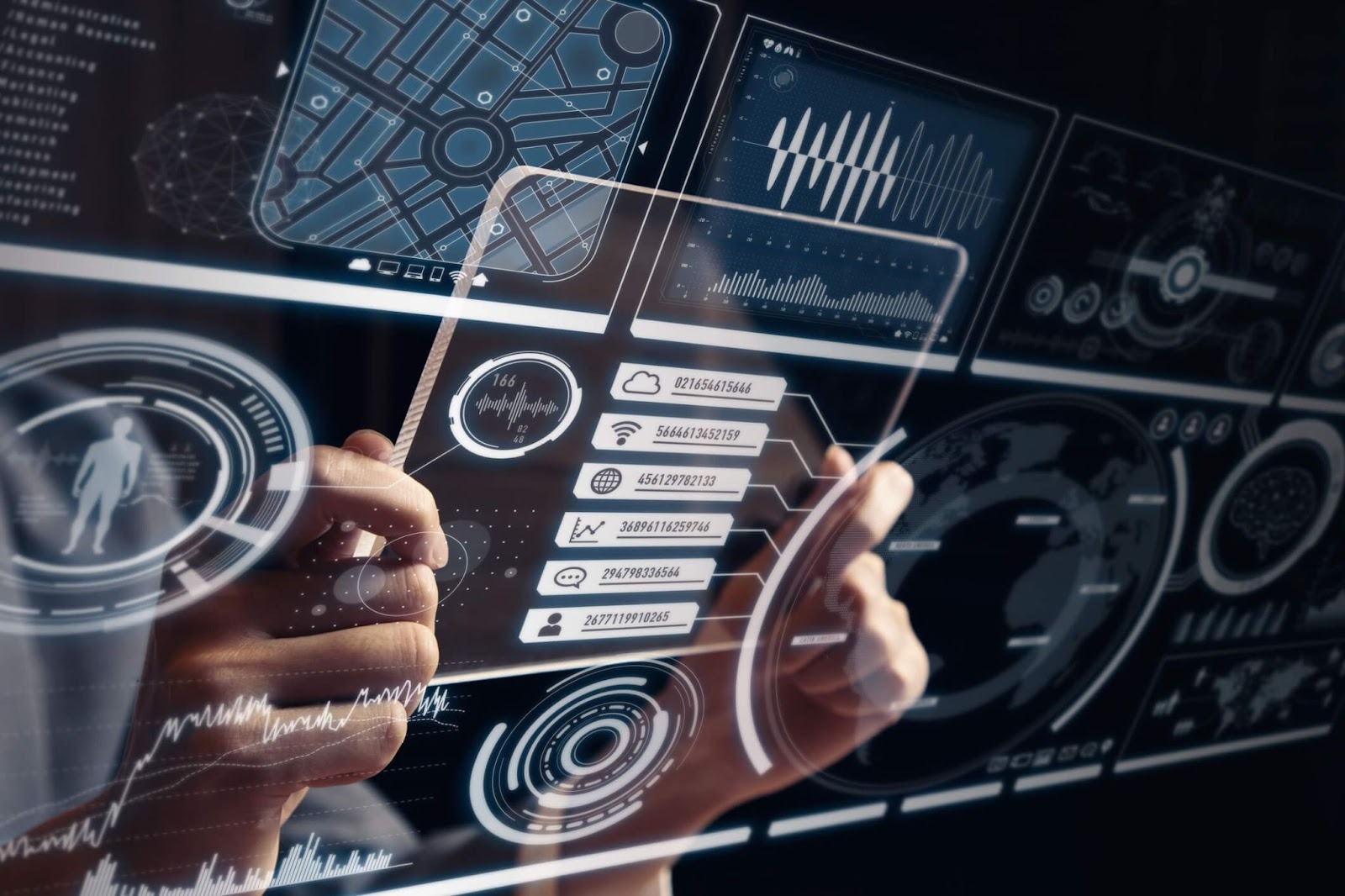
Source: https://www.appier.com/en/blog/what-does-it-take-to-be-an-ai-driven-enterprise
Microsoft Dynamics 365 Copilot and Copilot Studio were two big beneficiaries in the productivity stack, with new APIs added for context management and agent persistence. Developers can now chain task sequences inside a shared memory session without external orchestration.
Workday expanded its AI Services to automatically parse documents and provide contextual insights in payroll and recruiting modules, while HubSpot ChatSpot 2.0 unveiled Anthropic-powered agents that can perform CRM tasks independently. Adobe Experience Cloud brought Firefly together with its Marketing AI layer, auto-generating visuals and copy variants from campaign metadata. Atlassian Intelligence connected their Jira, Confluence, and Trello through shared LLM embeddings with backlog summaries and documentation updates triggered by issue changes.
Across collaboration ecosystems, Slack AI Actions introduced message-level task automation powered by OpenAI integrations, Zoom AI Companion added governance logs and post-meeting analytics, and Notion AI rolled out autonomous workspace summarization to consolidate project insights.
Q3 2025 saw the EU AI Act advance to phase one implementation, introducing compliance obligations for General Purpose AI (GPAI) systems. EU-based vendors also had to document models, the risk-management plan for a model, traceability records of how they work with data inputs and outputs, and what is expected in failure cases. Leading providers, including OpenAI, Anthropic, and Google, developed an in-house set of compliance tools, which allowed for the creation of automatic trace logs on every model run carried out in the region.
In the United States, lawmakers continued debating foundation-model transparency and licensing frameworks. However, even in the absence of any federal mandates, cloud and model providers began to roll out early readiness efforts in these domains, pre-packaging provenance tagging and artifact lineage tracking as part of their model registries in anticipation of eventual regulation.

Source: https://professional.dce.harvard.edu/blog/ethics-in-ai-why-it-matters/
In Asia, Japan and Korea jointly released guidelines on the safety of AI systems and the control of multi-agent environments that impose sandboxing mandates, event-logging practices, and identity verification for executing autonomous agents. Canada and Australia have also updated national privacy laws to incorporate synthetic-data governance that includes explicit recording of data generation parameters and anonymous protocols.
As of late 2025, three major vectors define where AI development is heading. The former concerns the establishment of multi-agent systems (MAS) as a default for deployment. With some exceptions, orchestration has been stabilized by frameworks such as LangGraph, CrewAI, or AutoGen 2.0, and large vendors are moving in the direction of integrating native support for agent graphs inside LLM runtimes. Large enterprise loads are now directly turning to agent hierarchies as the preferred means of coordinating retrieval, execution, and appraisal requests, demonstrating these new demands from single-model interactions up to distributed cognitive systems.
The second trend is the rapid development of multimodal intelligence. Models introduced in Q3 2025 (GPT-5, Gemini 2, and Claude 4.5) demonstrated functional parity across text, image, and audio inputs. By 2026, we hope to see this capacity grow to encompass video and 3D spatial data modalities; systems where perception, reasoning, and rendering take place in shared contextual models at scale. Vendors are re-modelling inference services to achieve high throughput over temporal data streams and including special encoders for depth, motion, and object coherence.
The third vector centers on human-in-the-loop (HITL) systems. And with an increased emphasis on consent, development pipelines are now adopting feedback capture, red-team metrics, and model evaluation as production jobs. Enterprises are standing up internal evaluation UIs, rater dashboards, and governance APIs to bake human validation right into LLM Ops. These HITL interfaces are now fundamental compliance mechanisms that generate traceable metadata according to the new transparency standards.
Supporting infrastructure will continue to evolve accordingly. GPU clusters designed for Mixture-of-Experts (MoE) and context-sharded inference will dominate procurement cycles. Observability and feedback systems will become default requirements in RFPs. The defining architecture of 2026 will not be a single model but a network of specialized agents, governed, instrumented, and optimized for explainability.
For executives and technical leads, staying informed is now a form of strategic due diligence. The landscape is moving fast, but the signal is visible for those tracking architecture and compliance in tandem.
Subscribe to the AI Insight Digest, a quarterly executive briefing delivering data-driven analysis on emerging AI frameworks and enterprise patterns. Receive curated intelligence that helps you plan and build with confidence!

Lorem ipsum dolor sit amet, consectetur adipiscing elit. Suspendisse varius enim in eros elementum tristique. Duis cursus, mi quis viverra ornare, eros dolor interdum nulla, ut commodo diam libero vitae erat. Aenean faucibus nibh et justo cursus id rutrum lorem imperdiet. Nunc ut sem vitae risus tristique posuere. uis cursus, mi quis viverra ornare, eros dolor interdum nulla, ut commodo diam libero vitae erat. Aenean faucibus nibh et justo cursus id rutrum lorem imperdiet. Nunc ut sem vitae risus tristique posuere.
Reply