

AI MVP Development: How Startups Validate AI Products Faster
Learn how startups build and validate AI MVPs faster using modern AI infrastructure and LLM technologies.
September 1, 2026
•
6
min read


The first wave of enterprise AI created visibility. Most organizations deployed AI into narrow functional seams, though, copilots in support, classifiers in operations, recommendation models in commerce, forecasting in supply chain, but left the underlying data estate fragmented. That architectural mismatch is now showing up in outcomes.
In IBM’s 2025 global CEO study, 50% of surveyed CEOs said rapid technology investment had resulted in disconnected, piecemeal technology inside their organizations, while only 16% said AI initiatives had scaled enterprise-wide. Put differently: plenty of AI has been deployed, but very little of it has been operationalized across the full enterprise graph.
The technical reason is simple. Traditional ML and GenAI pipelines are statistically powerful but context-thin. They detect patterns, correlations, and token relationships, yet they do not inherently understand enterprise reality. That a customer may belong to a household, an account hierarchy, a risk segment, a contract state, a geography, a consent regime, and a product lifecycle simultaneously.
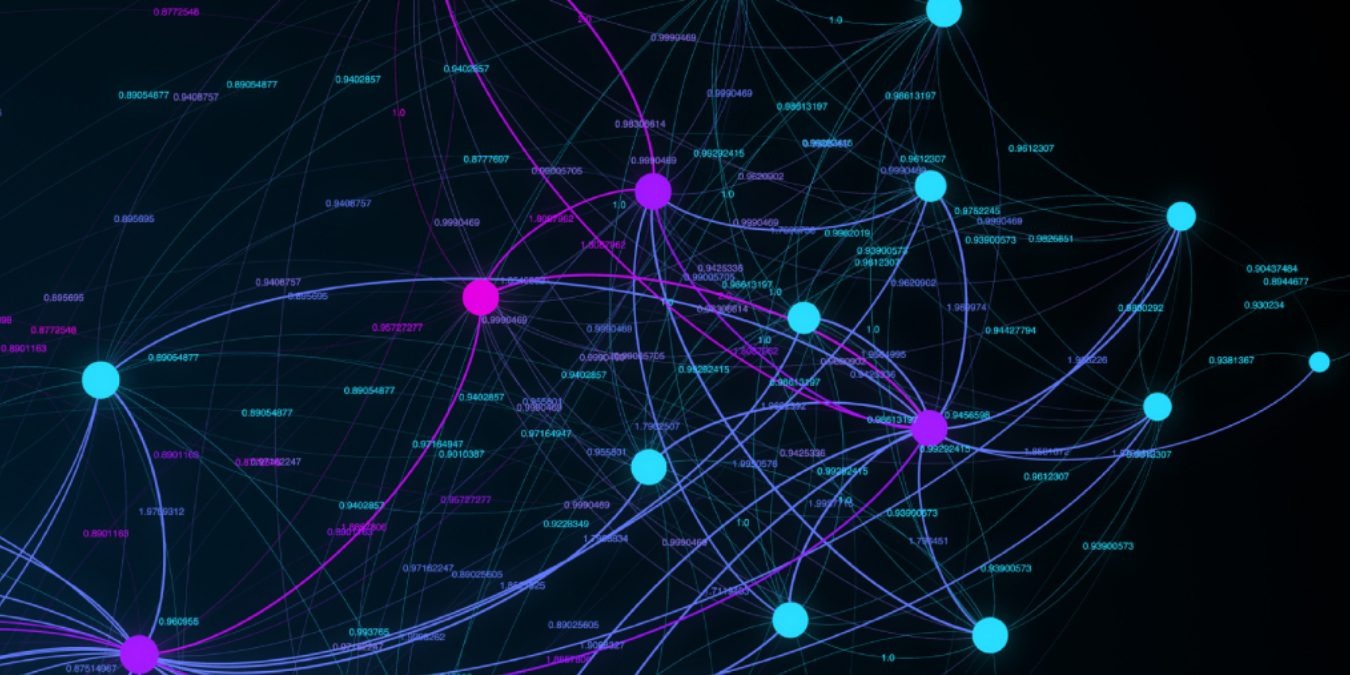
Source: https://knowler.cloud/knowledge-graphs-and-knowler/
This limitation becomes even more obvious in customer-facing use cases. One-size-fits-all experiences are no longer merely unimpressive; they are commercially inefficient. Salesforce’s latest connected customer research found that in 2024, 56% of customers felt most companies treat them as a unique individual, up from 39% in 2022, which signals that expectations for personalization have materially risen.
The scalability problem is equally structural. Personalization does not break at the algorithm layer first; it breaks at orchestration. Twilio Segment’s 2024 State of Personalization report found that 89% of business leaders view personalization as critical to business success over the next three years, and 73% believe AI adoption will fundamentally reshape personalization and marketing strategy.
So the core issue is not that AI is underpowered. It is that traditional AI approaches are under-contextualized.
Knowledge graphs in AI are a machine-readable map of how real-world entities are connected. Instead of storing data as isolated rows, files, or document chunks, it models entities such as customers, products, suppliers, accounts, contracts, events, and locations. Plus the relationships between them: owns, purchased, shipped from, depends on, belongs to, violates, is similar to, and is covered by.
That distinction is critical because traditional databases answer “what is stored,” while knowledge graphs are optimized to answer “what is connected, under what conditions, and why it matters.” A relational database can store a customer record, an order, and a support ticket. A knowledge graph can traverse the fact that the customer belongs to a household, that the order contains a regulated SKU, that the shipment originated from a supplier with recent disruption risk, and that the support case references a known defect affecting a specific product batch.
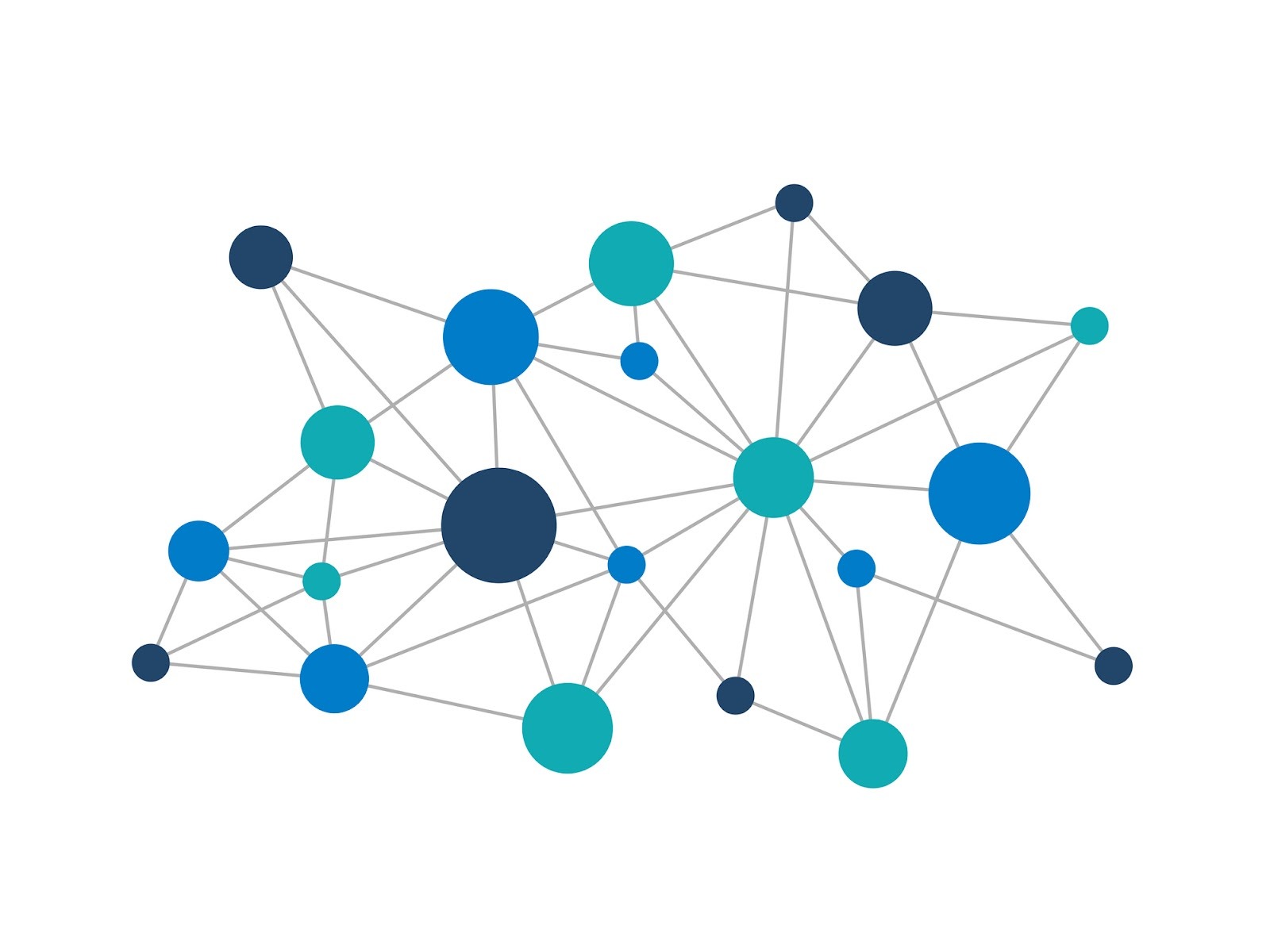
Source: https://www.actian.com/blog/data-governance/knowledge-graphs-the-key-to-modern-data-governance/
In other words, it preserves context topology. This is why graph-native architectures are increasingly used as the semantic substrate for enterprise AI: they make relationships first-class data, instead of forcing engineers to reconstruct them repeatedly through brittle joins, denormalized pipelines, or prompt-time heuristics.
This matters even more because enterprise information is no longer primarily tabular. IBM notes that roughly 90% of enterprise-generated data is unstructured, and in a January 2026 announcement it added that while around 90% of enterprise data is unstructured, only about 1% is accounted for in LLMs today. That gap is enormous. It means most AI systems are still operating on a narrow slice of the available knowledge base, even though the highest-value signals often sit in emails, PDFs, contracts, call transcripts, product documentation, tickets, images, and operational logs.
This is where the graph becomes a semantic layer for AI rather than just a storage pattern. A semantic layer encodes meaning: canonical business entities, aliases, taxonomies, lineage, rules, and valid relationships. In practical terms, that means the AI system no longer treats “customer,” “account holder,” “subscriber,” and “policy owner” as disconnected strings if they resolve to the same real-world entity under enterprise rules.
Knowledge graphs also support real-time context enrichment, which is where a lot of hidden business value actually appears. A graph can continuously absorb new events and immediately propagate their relevance through connected entities. That is a fundamentally different operating model from batch-oriented feature stores or static segmentation tables. In graph terms, one event can re-score risk, eligibility, affinity, or urgency across multiple hops in the network.

Source: https://symbl.ai/developers/blog/the-what-where-and-why-of-contextual-ai/
Neo4j’s current framing of contextual AI systems is explicit here: knowledge graphs improve accuracy, explainability, and evolving context for AI agents and applications. That is exactly the mechanism enterprises need when static prompts and isolated vector retrieval stop being sufficient.
Contemporary data-driven personalization is not a historical segmentation set-up based on static cohorts and batch rules. It is a low-latency decisioning framework that constantly blends behavioral data, session signals, identity state, device context, and intent probability into the next best experience.
That shift is major because personalization leaders are outperforming the laggards. AI is the prediction layer in that system. It counts propensity, churn risk, affinity, and timing from clickstream events, transaction history, content consumption, feature telemetry, and support interactions.
In Twilio’s 2024 State of Personalization, 89% of leaders believe personalization will be critical to business, and 73% claim AI will reinvigorate personalization strategy. That powers many things:
The marketplace pressure is also evident. Salesforce’s connected-customer research demonstrates increasing demand for personalized experiences, but trust thresholds are at a premium. It's all clear: static segmentation optimizes campaigns, whereas AI personalization optimizes user outcomes instantly.
Knowledge graphs act as the cognitive layer behind advanced personalization. They don’t treat customer signals as disconnected events spread across CRM, product analytics, commerce, support, and marketing systems, the graph resolves them into a unified entity model: who the user is, what they are connected to, what they have done, what they likely need, and which constraints apply in the current moment.

Source: https://www.typeface.ai/blog/image-personalization-best-practices
That changes personalization at a fundamental level. Traditional systems mostly react to behavior: clicks, views, purchases, drop-offs. A knowledge graph adds semantic context. It distinguishes intent from noise by mapping relationships between users, products, content, journeys, devices, accounts, subscriptions, and historical outcomes. A user viewing three enterprise security pages is not just “engaged”; in graph terms, they may be linked to a buying committee, a current contract cycle, a specific product dependency, and an upsell path.
The graph supplies structured context, entity resolution, and relationship-aware features; the model supplies prediction, ranking, and optimization. Together, they produce contextual recommendations that are materially more precise than rule-based targeting or flat-feature ML. The result is personalization that is not only reactive, but inferential, explainable, and operationally scalable across channels, journeys, and decision points.
Enterprises that operationalize AI with richer context and personalization are seeing measurable commercial lift. According to BCG 2025, companies leading in personalization have 10% higher annual growth and are on a path to capture a share of $2 trillion in value over the next three years. That translates directly into conversion economics: when recommendations, offers, and journeys are optimized against identity, intent, and context rather than static segments, conversion efficiency compounds across channels.
Retention is better for that reason as well. Personalization lowers friction within interactions, elevates relevancy, and improves customer satisfaction; something BCG considers to be a consistent advantage for personalization leaders. At the same time, McKinsey’s 2025 contribution on the next frontier of personalized marketing suggests that AI and GenAI enable businesses to scale tailored experiences much more precisely, moving retention from a campaign metric to a system-level outcome.
The internal operating impact is equally significant. Gartner claims AI-ready data improves business results by 20%, whilst cautioning that through 2026 organizations will abandon 60% of AI initiatives that are not supported by AI-ready data. IBM’s 2025 CEO study also states that 50% of leaders report that the fast-paced investment in tech has created disconnected, piecemeal architectures. Minimize fragmentation, and simultaneously increase decision quality, speed, and AI ROI.
Turning knowledge graphs and personalization into enterprise value is far from just a modeling exercise. It is a systems architecture program. The organizations that succeed start by building a context-aware data plane that can unify identity, propagate relationships, operationalize inference, and execute decisions at production latency.
Step one is data unification. It is only appropriate to aggregate CRM, ERP, behavioral, support, and unstructured data at a governed context layer. This, though, does not refer to simply consolidating everything into a single flat repository—it refers to building canonical entities, defining events, and formalizing data contracts across domains (customer, product, commerce, service, etc.). Lacking that, the personalization logic gets noisy and the AI outputs are fragmented.
Step two is to establish the knowledge graph layer. This is in which you explicitly demonstrate constructs such as entities, relationships, taxonomies, and business rules. The graph should show who the customer is, but also how this customer interacts with products, accounts, channels, contracts, content, and historical outcomes.

Source: https://www.quantumxl.co.uk/blog/ai-implementation-strategy/
Entity resolution is critical: There must be a mapping of multiple records across systems into a reliable, auditable identity model.
Step three is to build AI models on top of such a semantic layer. Recommendation engines, predictive analytics, and ranking models require graph-derived context and should not depend on isolated flat features. This allows for more precise inference, improved intent identification, and explainable decision-making. The graph sets the context; the models create scoring and optimization.
Next, organizations must deploy personalization engines using APIs and real-time infrastructure. Identity resolution, graph-based context retrieval, model scoring, and dynamic decision delivery across web, app, CRM, and support channels should kick in at every user interaction.
And finally, teams need to continuously measure and optimize. Core KPIs will probably consist of engagement, conversion, retention, AI recommendations acceptance, latency, graph freshness, and model lift. It is the end goal to go beyond customer-facing relevance, decreasing fragmentation and enhancing more rapid decision making, ultimately transforming AI into an active and enduring enterprise-wide decisioning capability.
The main failure mode remains data quality. Enterprise AI systems decay quickly when identity resolution, metadata quality, lineage, and semantic consistency are weak. 63 per cent of organizations lack, or are unsure whether they have, the right data management practices to handle AI, reported Gartner in February 2025. In practice, this can translate into personalization engines fine-tuning against incomplete profiles, recommendation models learning from spurious features, and graph relationships spreading bad context at scale. The next risk is scalability.
A lot of architectures do well at proof-of-concept scale, and then fail for enterprise-quality latency, concurrency, or cross-domain integration. Some generative AI projects turned down for abandonment since proof of principle on account of bad data quality, ineffective risk control, growing costs, or unclear business case.
The third risk is privacy and compliance. Aggressive data linking in personalization and graph-based intelligence increases exposure under GDPR and neighboring regulations. CMS GDPR Enforcement Tracker Report 2025: 2,560 fines total until March 1, 2025, a mean fine of about €2.36 million, and cumulative fines of over €5.65 billion.

Source: https://facephi.com/en/data-protection-artificial-intelligence-europe/
In March of 2026, the EDPB even stepped up its broad-based enforcement action targeting companies that make their use of data transparent (particularly where their information responsibilities are concerned) under an apparent persistent review of how organizations explain themselves when it comes to the use of data.
The last risk is the complexity of implementation. Knowledge-graph-driven personalization requires synchronized investment across integration, ontology design, identity resolution, real-time serving, governance, and MLOps. Technically, all this is huge, but at the same time, the upside is great too, but so is the burden of systems engineering.
The most effective enterprise AI strategy starts with narrowly defined, high-impact use cases rather than broad platform ambition. Prioritize domains where context density and commercial leverage are both high: recommendation, churn prevention, fraud detection, service triage, or next-best action.
Second, build a modular architecture. Separate ingestion, identity resolution, semantic modeling, graph storage, model serving, and decision APIs into loosely coupled layers. That design reduces blast radius, accelerates iteration, and avoids hard-wiring business logic into channels. Governance must be embedded at the same architectural level, not bolted on later: metadata, lineage, access control, consent enforcement, and policy-aware data contracts are mandatory if personalization is to scale safely.
Finally, combine domain expertise with AI engineering. Models detect patterns; domain experts define valid relationships, decision constraints, and business meaning. That combination is where personalization leaders outperform.
AI does not generate outsized enterprise value when set up as a standalone model layer. The true multiplier grows when intelligence is embedded in connected context, resolved entities, semantic relationships, and real-time personalization logic. That is where prediction becomes decision-making. That is where automation becomes an advantage.
By investing in this architecture, companies do more than drive AI performance up a notch; they weave a context-aware operating layer that elevates relevance, hones execution, and compounds competitive differentiation across every customer and business interaction.


Lorem ipsum dolor sit amet, consectetur adipiscing elit. Suspendisse varius enim in eros elementum tristique. Duis cursus, mi quis viverra ornare, eros dolor interdum nulla, ut commodo diam libero vitae erat. Aenean faucibus nibh et justo cursus id rutrum lorem imperdiet. Nunc ut sem vitae risus tristique posuere. uis cursus, mi quis viverra ornare, eros dolor interdum nulla, ut commodo diam libero vitae erat. Aenean faucibus nibh et justo cursus id rutrum lorem imperdiet. Nunc ut sem vitae risus tristique posuere.
Reply